
FORTRESS Consortium Advances Post-Quantum Security at Bordeaux Plenary Meeting
FORTRESS Consortium Advances Post-Quantum Security at Bordeaux Plenary Meeting
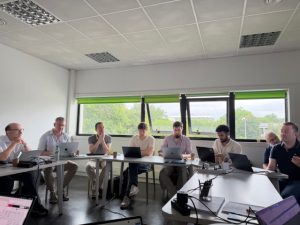
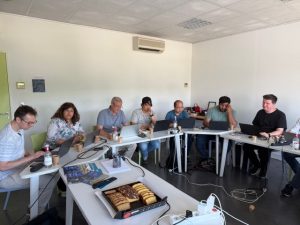
The FORTRESS consortium successfully concluded its latest plenary meeting in Bordeaux, France. The project plenary brings together project partners to review progress, strengthen collaboration, and define the next steps towards delivering secure, resilient, and quantum-ready digital infrastructures for Europe. Kindly hosted by eShard, the two-day meeting provided an important opportunity for technical discussions, strategic planning, and consortium-wide alignment.
The plenary opened with a warm welcome from the host, followed by project management and administrative updates from the Project coordinator Uwe Herzog from Eurescom that provided an overview of current achievements, upcoming milestones, and future deliverables. Partners reviewed the overall technical progress of the project by Dr. Axel Y. Poschmann from PQShield and discussed the continued implementation of the project’s work packages.
Day one focused on the advancement of FORTRESS’s core technical activities. The consortium reviewed progress in Work Package 1, led by Universität der Bundeswehr München, covering benchmarking activities and trade-off analyses to evaluate secure and efficient Root of Trust solutions. Discussions also centred on Work Package 2, led by PQShield, which is developing hybrid Root of Trust architectures by combining post-quantum and traditional cryptographic approaches to enable secure migration towards quantum-resilient systems.
In addition to the technical work, partners reviewed ongoing standardisation activities aimed at ensuring that project results contribute to the wider European cybersecurity ecosystem. Discussions also addressed exploitation planning, focusing on strategies to maximise the uptake of project outcomes, support future innovation, and strengthen Europe’s technological sovereignty in cybersecurity.
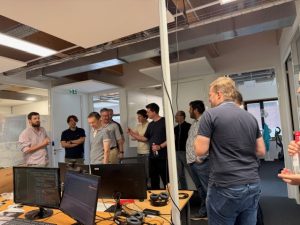
A particular highlight of the first day was a guided visit to eShard’s laboratories, where consortium members gained first-hand insights into the company’s expertise in hardware security evaluation, side-channel analysis, and practical security validation technologies. The visit provided valuable context for the technical work being undertaken within the project and fostered further collaboration among partners.
The second day concentrated on the Work packages 3 & 4 on integration and validation of FORTRESS technologies. Partners discussed progress on the integration and demonstration of end-to-end connectivity enabled by Root of Trust technologies, as well as the development of comprehensive test evidence and validation frameworks to demonstrate the security, robustness, and performance of the project’s solutions.
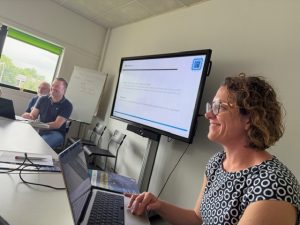
The consortium also reviewed dissemination, communication, and stakeholder engagement activities in Work package 5 led by Pooja Mohnani from Eurescom designed to maximise the visibility and impact of FORTRESS throughout its lifetime. Dedicated sessions addressed project risks, mitigation strategies, and upcoming milestones, ensuring continued alignment across all work packages and supporting the effective execution of future activities.
Throughout the meeting, partners engaged in productive technical exchanges and collaborative discussions that reinforced the shared vision of developing trustworthy, resilient, and future-proof digital infrastructures capable of addressing emerging cybersecurity challenges in the post-quantum era.
The FORTRESS consortium extends its sincere appreciation to all partners for their active participation, valuable contributions, and continued commitment to the project’s objectives. Special thanks are also extended to eShard for the excellent organisation and warm hospitality throughout the plenary meeting in Bordeaux.
As the project continues to progress, the outcomes of the Bordeaux plenary further strengthen the consortium’s collective efforts to develop innovative Root of Trust technologies and support Europe’s transition towards secure and quantum-resilient digital systems.